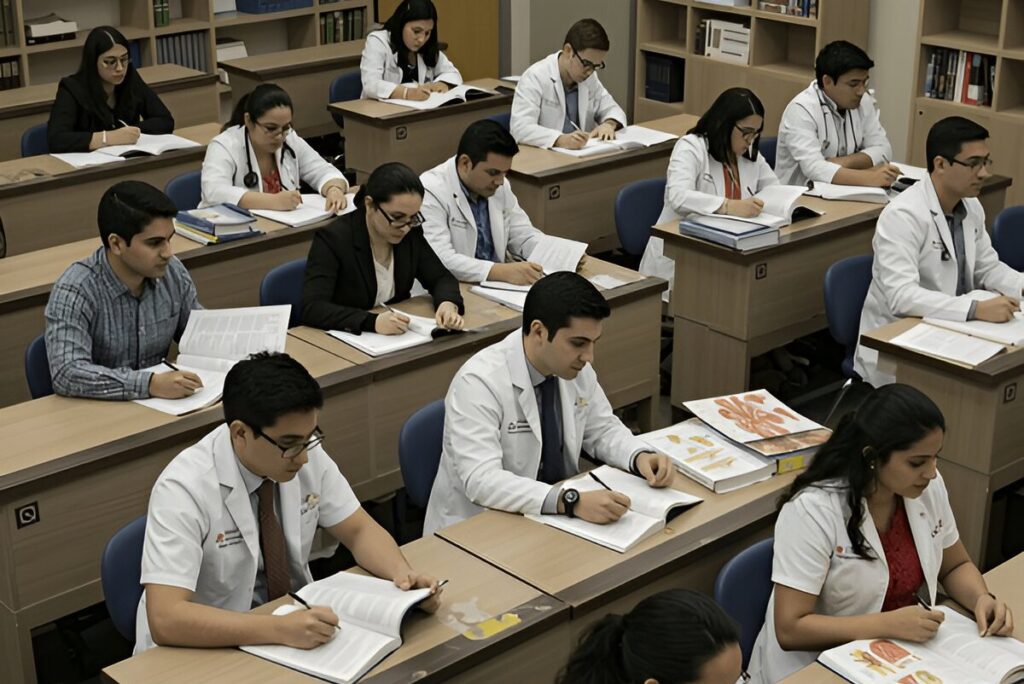

Securing a postgraduate medical seat in India is one of the most competitive academic journeys for MBBS graduates. Every year, thousands of doctors compete for limited postgraduate seats in specialties like Medicine, Surgery, Radiology, and Orthopedics. Because of this intense competition, many candidates start exploring MD MS Direct Admission in India as a structured pathway to secure their specialization after qualifying the NEET PG examination.
According to national medical education data, more than 2 lakh candidates appear for NEET PG annually, while the total number of MD/MS seats across government and private colleges remains around 70,000+ seats. This gap between demand and availability makes the counselling and seat allotment process extremely strategic and sometimes confusing for candidates.
At this stage, many students rely on expert guidance such as MD MS Admission consultancy services to navigate counselling rounds, understand seat matrices, and make informed decisions about their specialization and institution.
Understanding the complete process—from qualifying NEET PG to final seat allotment—is essential for every postgraduate medical aspirant. This guide explains the full admission journey, eligibility requirements, counselling stages, documentation, and strategic steps required to secure MD/MS admission in India.
Understanding the Postgraduate Medical Admission System in India
Postgraduate medical admissions in India follow a centralized structure governed by national regulatory authorities. The system ensures transparency, merit-based seat allocation, and standardized counselling procedures.
India currently offers postgraduate medical programs primarily in two categories:
| Course | Duration | Focus |
|---|---|---|
| MD (Doctor of Medicine) | 3 Years | Non-surgical clinical specialties |
| MS (Master of Surgery) | 3 Years | Surgical specialties |
Some of the most competitive MD/MS specialties include:
-
General Medicine
-
Radiology
-
Dermatology
-
Orthopedics
-
General Surgery
-
Pediatrics
-
Obstetrics and Gynecology
The postgraduate admission framework is regulated by the National Medical Commission (NMC) and coordinated through centralized counselling authorities.
For official policies governing medical education and postgraduate seats, candidates can refer to the guidelines published by the National Medical Commission under the Government of India.
Why Do Many Doctors Choose MD MS Direct Admission in India?
Many qualified MBBS graduates prefer structured guidance during the postgraduate admission process because the counselling system involves multiple layers, including national counselling, state counselling, and institutional quotas.
Several factors influence this decision:
1. Limited PG Seats Compared to Applicants
-
NEET PG applicants each year: ~2.2 lakh
-
Total MD/MS seats available: ~70,000+
-
Competition ratio: nearly 1 seat for every 3 candidates
This intense competition makes strategic counselling choices extremely important.
2. Complex Counselling Rounds
The admission process includes:
-
AIQ counselling
-
State quota counselling
-
Mop-up rounds
-
Institutional rounds
Without proper strategy, students often miss suitable seat opportunities.
3. Multiple Specialization Choices
Selecting a specialization requires careful evaluation of:
-
Career growth
-
Residency workload
-
Demand in the healthcare industry
-
Future super-specialization opportunities
What Is the Eligibility for MD/MS Admission in India?
How Does the NEET PG Counselling Process Work?
After NEET PG results are declared, the admission process moves to centralized counselling.
Major Counselling Authorities
| Counselling Type | Authority |
|---|---|
| All India Quota (AIQ) | MCC |
| State Quota | State Counselling Authorities |
| Deemed Universities | MCC |
| Private Universities | Institutional Counselling |
Each authority conducts multiple counselling rounds to allocate seats based on merit and preferences.
Step-by-Step Process for MD MS Admission in India
Understanding the structured pathway helps candidates avoid mistakes during counselling.
Step 1: NEET PG Qualification
Candidates must first clear NEET PG to become eligible for postgraduate medical admission.
Key statistics:
-
Average exam difficulty varies each year
-
Top ranks below 10,000 often secure high-demand specialties
Step 2: Counselling Registration
Candidates must register on official counselling portals and submit their preferences.
Registration usually involves:
-
Personal details
-
Academic credentials
-
NEET PG rank submission
-
Document upload
Step 3: Choice Filling and Locking
During this stage, candidates select:
-
Preferred colleges
-
Preferred specialties
-
Seat categories
Strategic choice filling significantly improves seat allotment chances.
Step 4: Seat Allotment
The counselling system allocates seats based on:
-
NEET PG rank
-
Candidate preferences
-
Seat availability
-
Reservation category
Step 5: Document Verification
Candidates must verify their credentials at the allotted institute.
Required documents include:
-
NEET PG admit card
-
NEET PG rank card
-
MBBS degree certificate
-
Internship completion certificate
-
Medical registration certificate
-
Identity proof
Step 6: Reporting to the College
After the document verification process is successfully completed, candidates must report to the allotted medical college within the specified deadline to confirm their admission. During this stage, students are required to submit their original documents for final verification, complete admission formalities, and follow the institute’s reporting guidelines.
Failure to report within the given timeframe may lead to cancellation of the allotted seat, allowing it to be offered to another eligible candidate in the subsequent counselling rounds. Therefore, timely reporting and completion of all institutional procedures are essential to secure the admission successfully.
Seat Distribution for MD/MS Programs in India
Seat allocation varies across government, private, and deemed universities.
| Institution Type | Approx PG Seats |
|---|---|
| Government Medical Colleges | ~35,000 |
| Private Medical Colleges | ~25,000 |
| Deemed Universities | ~10,000 |
Government colleges are highly competitive due to lower tuition structures and strong clinical exposure.
Private institutions offer additional opportunities for candidates with moderate ranks.
What Specializations Are Available for MD and MS?
Popular MD Specializations
-
MD General Medicine
-
MD Radiology
-
MD Dermatology
-
MD Pediatrics
-
MD Anesthesiology
Popular MS Specializations
-
MS General Surgery
-
MS Orthopedics
-
MS ENT
-
MS Ophthalmology
-
MS Obstetrics and Gynecology
Each specialization offers unique career prospects in hospitals, research institutions, and healthcare systems.
How Do Counselling Rounds Affect Seat Allotment?
Counselling rounds play a critical role in determining admission opportunities.
| Counselling Round | Purpose |
|---|---|
| Round 1 | Initial seat allocation |
| Round 2 | Upgradation or fresh allocation |
| Mop-Up Round | Remaining vacant seats |
| Stray Vacancy Round | Final seat allotment |
According to counselling trends, 10–15% of seats are filled during mop-up and stray vacancy rounds, giving additional chances to candidates.
Strategic Factors That Improve Admission Chances
Candidates who approach the process strategically significantly increase their chances of securing a postgraduate seat.
Key Decision Factors
-
NEET PG rank analysis
-
Specialty demand trends
-
Seat availability in various states
-
Counselling round strategy
Common Mistakes to Avoid
-
Filling too few college preferences
-
Ignoring state counselling opportunities
-
Not participating in mop-up rounds
Regional Trends in MD/MS Admissions Across India
Postgraduate medical admissions in India often show strong regional patterns. Certain states consistently attract a higher number of NEET PG applicants due to better clinical exposure, higher seat availability, and well-established medical education ecosystems.
Leading States for Postgraduate Medical Education
| State | Key Strengths |
|---|---|
| Karnataka | One of the highest numbers of private medical colleges offering MD/MS programs |
| Maharashtra | Large network of government and municipal teaching hospitals |
| Tamil Nadu | Long-established medical universities with strong clinical training systems |
| Uttar Pradesh | Rapid increase in medical colleges and postgraduate seats |
| Delhi | National referral hospitals with high patient inflow for advanced clinical training |
For instance, Karnataka hosts over 70 medical colleges, contributing a substantial share of India’s postgraduate seats. Similarly, Tamil Nadu has more than 35 government and private medical colleges, providing thousands of MD/MS training opportunities annually.
These regional medical hubs are particularly attractive to postgraduate aspirants because they combine advanced hospital infrastructure, high patient inflow, experienced faculty, and diverse specialty exposure—all essential factors for quality medical training and career growth.
Career Opportunities After Completing MD/MS
Completing a postgraduate medical degree significantly expands career opportunities.
Clinical Career Paths
-
Specialist physician
-
Consultant surgeon
-
Hospital department head
Academic Career Paths
-
Medical college faculty
-
Research scientist
-
Clinical educator
Advanced Training Options
Many specialists pursue super-specialization courses such as:
-
DM (Doctorate of Medicine)
-
MCh (Master of Chirurgiae)
Role of Professional Admission Guidance in the Process
Navigating the complex counselling structure requires careful planning and knowledge of seat trends.
Professional admission guidance helps candidates with:
-
Rank analysis and college prediction
-
Counselling strategy development
-
Documentation and application support
-
Real-time counselling updates
This support becomes particularly valuable when students aim to secure MD MS Direct Admission in India through structured counselling strategies.
Key Documents Required for PG Medical Admission
Candidates must keep all documents ready before counselling begins.
Essential Documents Checklist
-
NEET PG Admit Card
-
NEET PG Scorecard
-
MBBS Degree Certificate
-
Internship Completion Certificate
-
Permanent Medical Registration
-
Identity Proof
-
Passport-size Photographs
Missing documentation can delay or cancel admission during verification.
Future Outlook of Postgraduate Medical Education in India
India continues to expand postgraduate medical education to address the growing healthcare demand.
Government Expansion Initiatives
-
New medical colleges under national health initiatives
-
Increase in postgraduate seats annually
-
Strengthening district hospitals for PG training
Recent healthcare reports suggest that India aims to increase postgraduate medical seats by nearly 40% in the next decade to meet the growing demand for specialists.
Conclusion
Securing a postgraduate medical seat requires more than just qualifying the entrance examination. The journey from NEET PG qualification to final seat allotment involves strategic counselling decisions, careful specialization selection, and timely documentation.
For many aspiring specialists, understanding the admission process in depth is the key to successfully obtaining MD MS Direct Admission in India. With thousands of candidates competing each year, proper preparation and informed decision-making can make the difference between securing a seat and missing an opportunity.
By understanding counselling structures, evaluating specialization options, and staying updated with admission trends, medical graduates can confidently move toward the next stage of their professional journey.