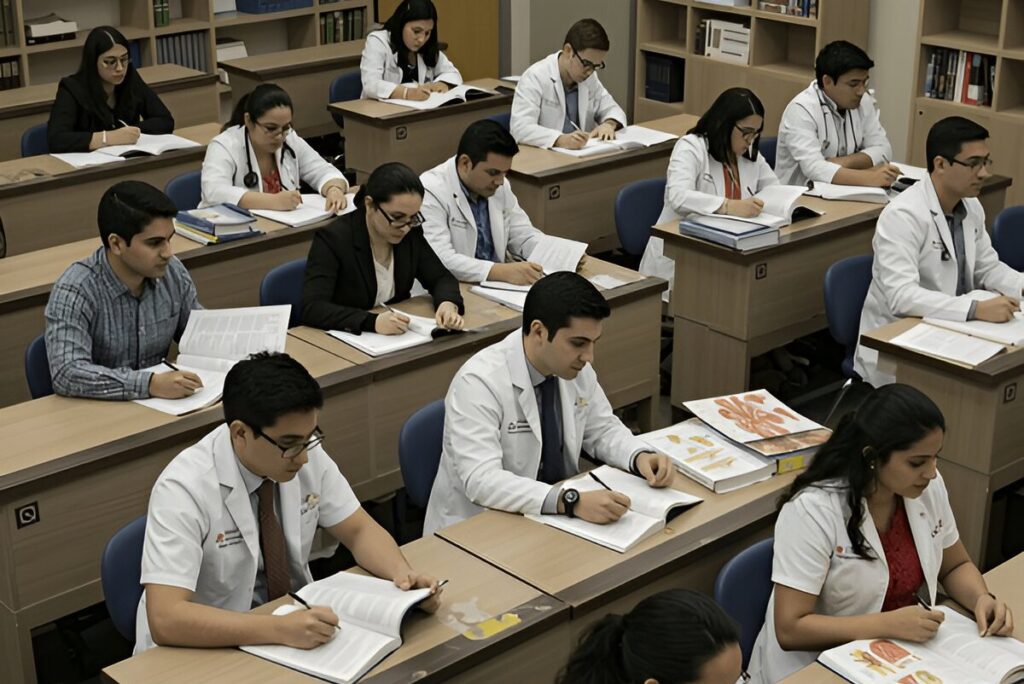

Every year, thousands of medical graduates clear the postgraduate entrance examination but still struggle during the counselling stage. The exam may determine eligibility, yet the real turning point often comes afterward. Choosing the right seat, college, and specialty during NEET PG Medical Counselling in India can shape the entire trajectory of a doctor’s career.
According to national medical admission data, more than 1.8 lakh candidates appear for the postgraduate entrance examination annually, competing for roughly 52,000 MD/MS and PG Diploma seats across India. That means the counselling stage becomes a high-stakes process where strategy, documentation, and informed decision-making determine success.
Therefore, understanding the structure and implications of NEET PG Medical Counselling in India is not optional for candidates aiming to secure the right postgraduate seat. It is a structured national process conducted through centralized authorities and state bodies.
This guide explores the complete counselling framework, seat allocation mechanisms, decision-making strategies, and real-world considerations that medical graduates must understand before making their final choice.
What Makes NEET PG Medical Counselling in India So Critical?
Most candidates focus heavily on the entrance exam. However, data shows that a significant percentage of qualified candidates lose potential seats due to poor counselling decisions.
In fact:
| Factor | Impact on Admission |
|---|---|
| Rank alone | Determines eligibility but not final seat |
| Counselling strategy | Influences specialty and college |
| Documentation errors | Can cause seat cancellation |
| Choice filling mistakes | May lead to undesired allotment |
For example, a candidate with a mid-range rank who plans choices strategically often secures a better seat than someone with a higher rank but poor planning.
Why Does Counselling Influence Career Outcomes?
Several factors explain why NEET PG Medical Counselling in India plays a decisive role in shaping a doctor’s professional future.
-
Specialty selection determines the long-term clinical and academic career path.
-
Institutional exposure directly affects the quality of postgraduate training and mentorship.
-
Hospital patient load influences the volume of real clinical cases residents handle.
-
Location of the institution impacts professional networking, fellowship opportunities, and future job prospects.
According to medical education reports, over 70% of medical specialists eventually establish their careers in the same region where they complete their postgraduate training.
Therefore, counselling decisions extend far beyond securing a seat. They significantly influence professional networks, clinical experience, and long-term career growth within the healthcare ecosystem.
How Does the NEET PG Counselling System Work in India?
The postgraduate counselling system operates through centralized and state-level processes. The national counselling authority is the Medical Counselling Committee.
This committee conducts counselling for:
-
All India Quota seats (AIQ)
-
Deemed universities
-
Central universities
-
Armed Forces Medical Services institutions
Meanwhile, individual state authorities manage counselling for state quota seats.
Key Statistics of the Counselling Structure
| Category | Percentage of Seats |
|---|---|
| All India Quota | 50% |
| State Quota | 50% |
| Deemed Universities | Variable |
| Central Universities | Limited seats |
The counselling process itself occurs online through the official admission portal governed under the regulations of the National Medical Commission.
If you want to understand the broader structure of the national counselling system, the framework of the Medical Counselling Committee explains the official process.
What Are the Different Counselling Rounds?
Counselling does not occur in a single stage. Instead, it unfolds through multiple rounds to ensure maximum seat utilization.
Standard Counselling Rounds
| Round | Purpose |
|---|---|
| Round 1 | Initial seat allocation based on rank and choices |
| Round 2 | Upgradation or new allotment |
| Mop-Up Round | Filling remaining seats |
| Stray Vacancy Round | Final institutional level allotments |
Data from previous admission cycles shows that approximately 15–20% of seats change hands during Round 2 due to candidate upgrades.
Why Do Upgradations Happen?
Upgradation occurs when:
-
Candidates withdraw from previous seats.
-
Higher preference choices become available.
-
New seats open during later rounds.
Consequently, many candidates adopt a “safe-plus-ambitious” strategy during choice filling.
What Documents Are Required During Counselling?
Documentation remains one of the most underestimated aspects of the process. Even highly ranked candidates can lose seats due to verification failures.
Essential Documents
-
NEET PG scorecard
-
Admit card
-
MBBS degree certificate
-
Internship completion certificate
-
Permanent or provisional registration certificate
-
Identity proof
-
Category certificate (if applicable)
According to admission authorities, documentation errors account for nearly 8–10% of counselling disqualifications each year.
Why Document Verification Matters
Verification ensures:
-
Eligibility authenticity
-
Internship completion status
-
Registration compliance
-
Reservation eligibility
Without valid documentation, the candidate cannot proceed to seat confirmation.
How Does Seat Allocation Actually Work?
Seat allotment follows a structured algorithm that considers rank, category, and preferences.
The basic order of evaluation includes:
-
Candidate’s rank
-
Category eligibility
-
Choice preference list
-
Seat availability
-
Reservation policies
Seat Allocation Example
| Candidate Rank | Choice 1 | Choice 2 | Result |
|---|---|---|---|
| 4,500 | Medicine | Radiology | Medicine allotted |
| 6,200 | Radiology | Medicine | Medicine allotted |
| 8,300 | Pediatrics | Surgery | Pediatrics allotted |
The allocation algorithm ensures fairness across thousands of applicants.
What Factors Should Candidates Consider Before Choosing a Specialty?
Selecting a specialty during counselling is one of the most important decisions for future doctors.
A survey of postgraduate doctors shows the following influencing factors:
| Factor | Influence Percentage |
|---|---|
| Clinical exposure | 42% |
| Lifestyle considerations | 21% |
| Career opportunities | 19% |
| Academic interest | 18% |
Key Questions Candidates Should Ask
-
Does the specialty match long-term interests?
-
What is the patient volume in the institution?
-
Are research opportunities available?
-
Does the hospital offer adequate clinical exposure?
For example, high-volume hospitals provide better hands-on experience compared to smaller teaching institutions.
What Are the Common Mistakes Candidates Make During Counselling?
Despite preparation, many candidates repeat similar errors during the counselling process.
Frequent Counselling Mistakes
-
Filling too few choices
-
Ignoring backup specialties
-
Misinterpreting seat matrices
-
Submitting incomplete documentation
-
Locking choices without review
According to admission analytics reports, candidates who list more than 150 preferences have significantly higher seat success rates.
Why Strategic Choice Filling Matters
Choice filling directly affects the outcome of NEET PG admission, especially in highly competitive specialties where seat availability changes rapidly between rounds.
A well-structured preference list can improve chances of obtaining a favorable seat even with moderate ranks.
How Does State Counselling Differ From All India Quota?
Many candidates misunderstand the distinction between national and state counselling.
Comparison Table
| Feature | All India Quota | State Quota |
|---|---|---|
| Conducting authority | Central committee | State authorities |
| Seat share | 50% | 50% |
| Eligibility | Open nationwide | State domicile rules |
| Competition level | Very high | Moderate |
Statistics show that some state quotas offer comparatively better opportunities for candidates with mid-range ranks.
Therefore, strategic participation in both counselling streams becomes essential.
How Location Influences Career Opportunities
Location plays a significant role in postgraduate medical training.
Major medical education hubs include:
-
Bengaluru
-
Delhi
-
Chennai
-
Mumbai
-
Hyderabad
Research indicates that over 60% of postgraduate doctors secure their first job within the same state where they complete training.
Therefore, geographical considerations should be evaluated alongside specialty choices.
This becomes particularly relevant when candidates evaluate long-term outcomes associated with NEET PG admission decisions.
What Role Does Institutional Reputation Play?
The reputation of a teaching hospital affects training quality and future opportunities.
Key indicators of institutional strength include:
| Indicator | Importance |
|---|---|
| Patient load | Determines clinical exposure |
| Faculty strength | Influences academic learning |
| Research output | Impacts academic career prospects |
| Infrastructure | Affects practical training |
For instance, hospitals with more than 1,000 daily patient visits typically provide higher surgical exposure to residents.
Thus, candidates should evaluate teaching hospitals beyond brand reputation.
How Should Candidates Plan Their Counselling Strategy?
A strong strategy improves the probability of securing preferred seats.
Step-by-Step Strategy
-
Analyze previous year seat matrices.
-
Understand rank versus specialty trends.
-
Identify realistic specialty targets.
-
Create a broad preference list.
-
Monitor round-wise seat movements.
Data analysis from recent counselling cycles suggests that rank movement between rounds can exceed 1,500 positions in certain specialties.
Consequently, flexibility and continuous monitoring become essential.
Real-World Case Example: Strategic Counselling Success
A candidate with a rank of 11,200 initially believed that clinical medicine seats were unattainable.
However, after:
-
Expanding preference lists
-
Participating in later rounds
-
Monitoring seat withdrawals
The candidate secured a postgraduate seat during the mop-up stage.
Such cases highlight how informed participation in NEET PG Medical Counselling in India can significantly change outcomes.
What Happens After Seat Allotment?
Once a seat is allotted, candidates must complete several formalities.
Post-Allotment Steps
-
Download allotment letter
-
Report to the allotted institution
-
Complete document verification
-
Pay admission fees
-
Confirm seat acceptance
Statistics show that nearly 5–7% of allotted seats remain unclaimed each year due to reporting delays.
Therefore, timely action is critical.
At this stage, candidates finalize their NEET PG admission by completing institutional formalities and joining postgraduate programs.
The Long-Term Impact of Counselling Decisions
Postgraduate specialization determines a doctor’s professional identity.
Research in medical career outcomes suggests:
-
Specialists often remain within their chosen field for 30–35 years.
-
Training institution networks influence job placements.
-
Early exposure affects research and fellowship opportunities.
Thus, NEET PG Medical Counselling in India represents more than a procedural step—it is a career-defining decision.
Careful evaluation, strategic choice filling, and informed participation allow candidates to maximize opportunities in one of the most competitive medical education systems in the world.
Frequently Asked Questions (FAQs)
1. How many rounds are conducted in NEET PG counselling in India?
NEET PG counselling usually includes four rounds: Round 1, Round 2, Mop-Up Round, and Stray Vacancy Round, ensuring maximum seat utilization across medical colleges.
2. Who conducts NEET PG counselling in India?
The counselling process for All India Quota seats is conducted by the Medical Counselling Committee, while state authorities conduct counselling for respective state quota postgraduate medical seats.
3. Can candidates upgrade their seats after Round 1?
Yes, candidates who accept a seat in Round 1 may choose an upgrade option. They can participate in Round 2 counselling for better specialization.
4. Is state counselling mandatory after qualifying NEET PG?
No, participating in state counselling is optional. Candidates may choose All India Quota counselling, state quota counselling, or both depending on eligibility.
5. What happens if a candidate does not report after seat allotment?
If a candidate fails to report to the allotted medical college within the deadline, the allotted seat gets cancelled and may affect eligibility for further rounds.